
It's All Hormones: How Exercise Affects Our Endocrine System
What are hormones?
Hormones are the body's chemical messengers. They are substances produced by the endocrine glands (such as the thyroid, adrenal glands, pancreas, and others) and released directly into the bloodstream.
Where are they produced?
Hormones are synthesized inside the cells of the endocrine glands. Depending on the type, their production and storage take place in specific cell organelles: in the rough endoplasmic reticulum, peptide and protein hormones are synthesized (such as insulin and growth hormone); in the Golgi apparatus, hormones are packaged into secretory vesicles and stored temporarily; while in the smooth endoplasmic reticulum, steroid hormones are synthesized (such as cortisol, estrogen, and testosterone), which are produced mainly from cholesterol.
Where are hormones sent?
Once packaged into secretory vesicles inside the cell, hormones are released into the surrounding environment and follow this path:
• Into the bloodstream: Since endocrine glands have no ducts, hormones are released directly into the capillaries and carried everywhere via the blood.
• To target organs: Although they travel throughout the entire body, they act selectively, only on the target cells they are meant to affect.
• To specific receptors: Target cells have unique proteins (receptors) on their surface or inside them, which 'lock' exclusively with the specific hormone to trigger the response signal.
The 5 key hormones during exercise
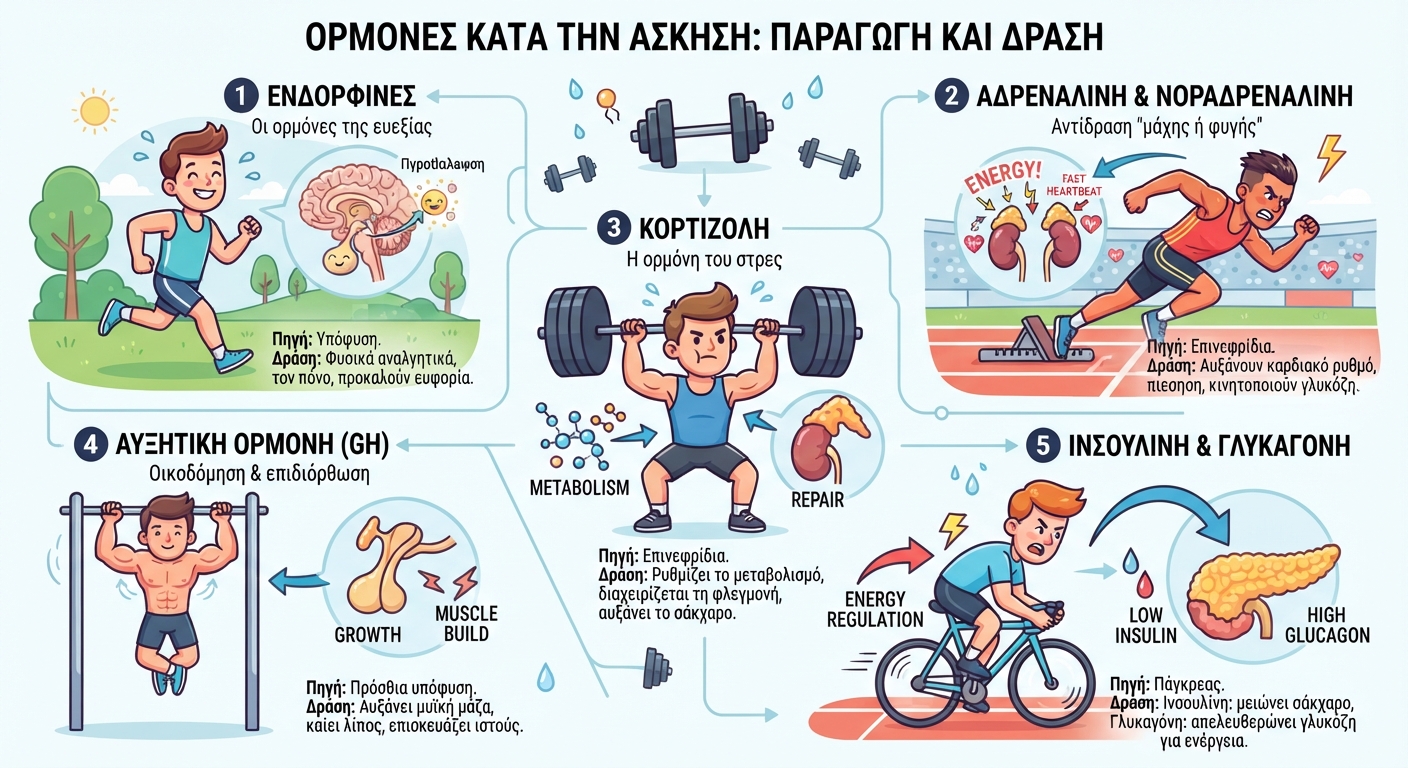
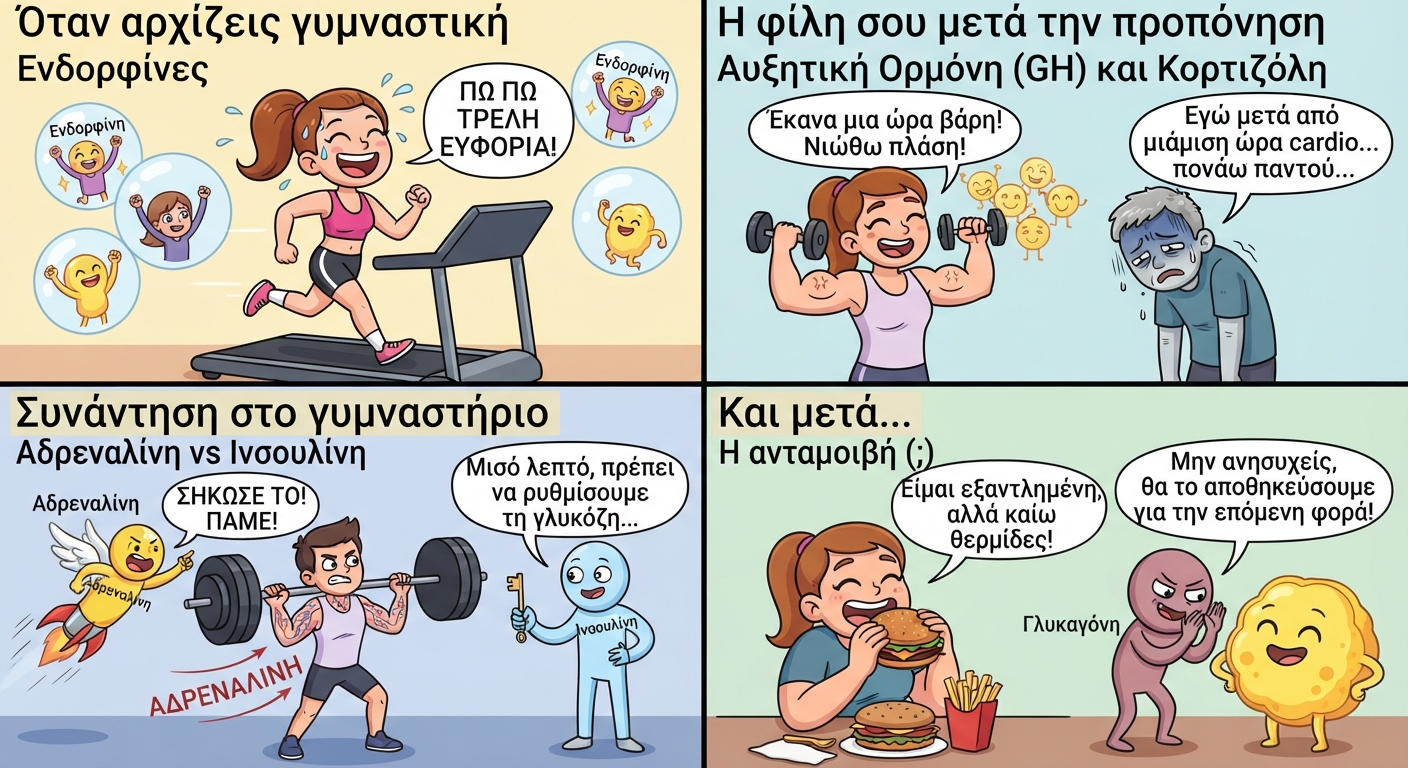
1. Endorphins ('the wellbeing hormones'): Released by the pituitary gland and the hypothalamus, mainly in response to pain, prolonged effort, and intense aerobic exercise (the well-known 'runner's high'). They act as the body's natural painkillers, reduce the feeling of fatigue, and cause euphoria and relaxation.
2. Adrenaline and Norepinephrine: Produced by the adrenal glands and activated immediately by the sympathetic nervous system as soon as exercise begins. They increase heart rate and blood pressure, dilate the airways, and mobilize glycogen and fat stores for quick energy.
3. Cortisol ('the stress hormone'): Also secreted by the adrenal glands in response to the physical stress of exercise, especially when it's prolonged or high-intensity. It regulates metabolism by raising available glucose and helps manage the inflammation caused by muscular strain.
4. Growth Hormone (GH): Released by the anterior pituitary and surges after high-intensity exercise (resistance training, HIIT) and during the sleep that follows. It stimulates muscle growth, tissue repair, and fat burning.
5. Insulin and Glucagon: Produced by the pancreas. During exercise, insulin decreases while glucagon increases, keeping blood sugar levels stable and ensuring a steady flow of energy to the muscles.